

Navigating the Australian healthcare system for vision correction can be complex. When you are diagnosed with cataracts, the most critical decision involves choosing between the public and private systems. This choice directly impacts your out-of-pocket expenses, the waiting period you will endure, and the level of technology used during your procedure.
In Australia, cataract surgery is one of the most frequently performed elective procedures. While the public system offers a safety net through Medicare, the private sector provides significantly faster access and more customizable surgical options. This article provides an authoritative breakdown of the fees, wait times, and clinical outcomes for both pathways in 2026.
See more: Bulk-Billed & Affordable Cataract Surgery Options in Australia for Pensioners
What is Cataract Surgery? Understanding the Basics
Cataract surgery is a day-procedure designed to restore vision that has become clouded by the natural aging of the eye’s lens. The surgeon removes the opaque lens and replaces it with an Intraocular Lens (IOL).
In the Australian context, the “Public vs. Private” debate isn’t about the quality of the surgeons—many specialists operate in both sectors—but rather about the resource allocation and waitlist management inherent in each system.
Private vs. Public Cataract Surgery: Key Differences at a Glance
To help you make an informed decision, we have summarized the primary differences between the two systems below:
| Feature | Public System (Medicare) | Private System (Insured/Self-Funded) |
| Cost | Generally $0 (Bulk-billed) | $480 – $5,000+ per eye |
| Wait Time | 6 to 18+ months | 2 to 4 weeks |
| Surgeon Choice | Assigned by the hospital | Your choice of specialist |
| Lens Options | Standard monofocal lenses | Premium (Toric, Multifocal, EDOF) |
| Facility | Public hospital | Private day surgery or hospital |
In-Depth Fee Breakdown: What Will You Actually Pay?
1. The Public System (Medicare-Only)
If you choose the public route, your surgery is typically “free” at the point of care. Medicare covers the surgeon’s fees, anaesthetist fees, and the cost of a standard monofocal lens.
- Out-of-Pocket Costs: Usually $0, though you may pay for initial specialist consultations in private rooms before being placed on the public waitlist.
- Limitation: You cannot “upgrade” your lens in a public hospital. If you require a Toric lens for astigmatism, you may still need glasses after surgery.
2. The Private System with Health Insurance
Most patients in the private system use Silver Plus or Gold hospital cover.
- Typical Gap Fees: Even with insurance, 58% of patients pay an out-of-pocket gap. In 2026, the average gap for the surgeon and anaesthetist ranges from $480 to $2,100 per eye.
- Hospital Excess: Depending on your policy, you may need to pay an excess (typically $250 to $750).
3. Self-Funded Private Surgery (Uninsured)
If you do not have private health insurance but want to skip the waitlist, you can “self-fund.”
- Total Cost: Between $3,000 and $5,500 per eye.
- Breakdown: This includes the hospital theatre fee (~$2,500), the surgeon’s fee, the anaesthetist, and the cost of the specific IOL.
Wait Times: The Reality of the “Great Divide”
Wait times are the primary driver for patients moving into the private sector.
Public Waitlists (The “Hidden” Wait)
While the Australian Institute of Health and Welfare (AIHW) reports median wait times of approximately 106 days, this often only tracks the time from the moment you are “listed” for surgery.
- The First Wait: Seeing an optometrist, getting a GP referral, and waiting months for an initial public hospital clinic appointment.
- The Second Wait: The time spent on the elective surgery list. In states like NSW and Victoria, it is not uncommon for “Category 3” (non-urgent) patients to wait over 12 months.
Private Access
In the private system, the timeline is dictated by your convenience. Once you have your specialist consultation, surgery can often be scheduled within 14 to 30 days.
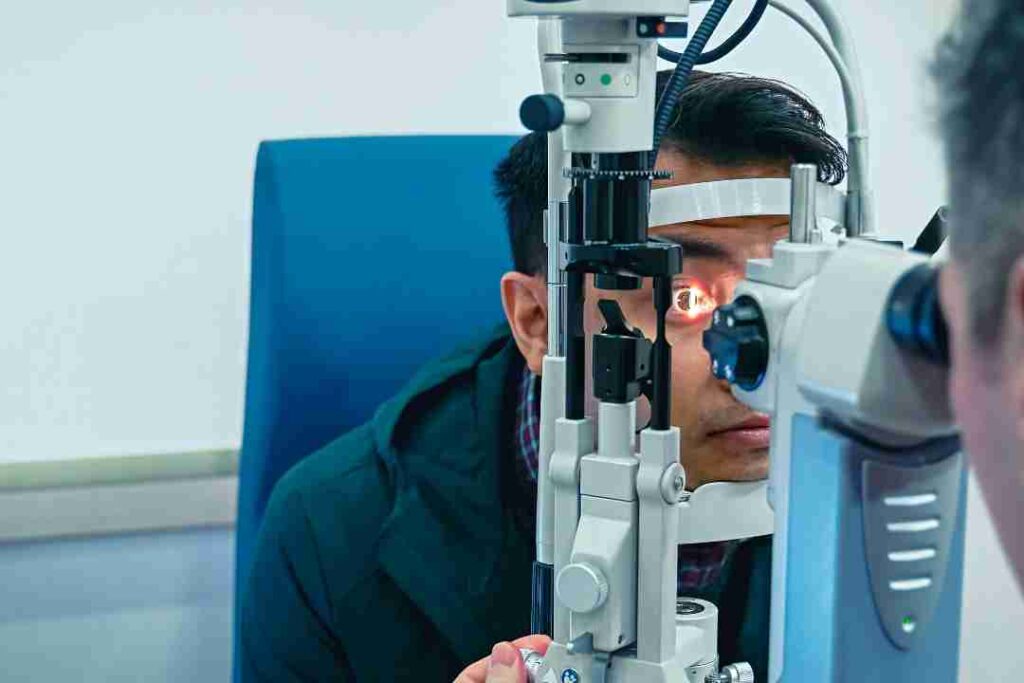
Benefits of Choosing Private Cataract Surgery
Beyond speed, the private system offers several clinical and lifestyle advantages:
- Choice of Specialist: You can research and select a surgeon who specializes in specific techniques, such as Laser-Assisted Cataract Surgery (LACS).
- Premium Lens Technology: Private patients have access to advanced IOLs that can correct astigmatism (Toric) or provide a full range of vision from near to far (Multifocal/EDOF), potentially eliminating the need for glasses.
- Continuity of Care: You see the same surgeon for your initial assessment, the procedure, and all post-operative follow-ups.
Step-by-Step: The Patient Journey in Australia
Step 1: Diagnosis & Referral
Visit your local optometrist for a comprehensive eye exam. If cataracts are impacting your quality of life, they will provide a report for your GP, who then issues a formal referral to an ophthalmologist.
Step 2: The Consultation
Your specialist will measure your eye (biometry) to determine the required lens power. This is the point where you must decide on the public or private pathway.
Step 3: Financial Consent
If going private, you will receive a Informed Financial Consent document. This outlines exactly what Medicare will rebate and what your “gap” will be.
Common Mistakes to Avoid
- Assuming “Eye Cover” Includes Cataracts: Many “Bronze” or “Silver” health insurance policies cover “Eye (not cataracts).” Always check your policy for the specific Cataracts clinical category.
- Ignoring the 12-Month Waiting Period: If you take out private insurance today, you must wait 12 months before it covers cataract surgery if the condition is deemed “pre-existing.”
- Not Asking About the Gap: Surgeon fees vary wildly. Don’t be afraid to ask for a “No Gap” or “Known Gap” specialist if you are on a budget.
Frequently Asked Questions (FAQ)
Is cataract surgery free for pensioners in Australia?
Yes, in the public system, it is free for pensioners under Medicare. However, the standard wait times apply. In the private system, pensioners still face gap fees unless their surgeon offers a specific concessional rate.
Does Medicare cover the cost of private surgery?
Medicare pays a portion of the fee (75% of the Medicare Benefits Schedule fee) for private surgery. It does not cover the private hospital theatre fees or the “gap” charged by the doctor.
Can I have one eye done public and the other private?
While legally possible, it is rarely recommended due to the fragmented nature of care and the potential for long delays between the two procedures, which can cause significant depth-perception issues.
How long does the actual surgery take?
The procedure is remarkably fast, usually taking between 15 and 30 minutes. You are typically in the day surgery for about 2–3 hours in total.
What is the best lens for cataract surgery?
There is no “best” lens—only the best lens for your lifestyle. A monofocal lens is excellent for distance vision, while premium lenses are better for those wanting to reduce reliance on reading glasses.
Conclusion: Making the Right Choice for Your Vision
Choosing between private vs. public cataract surgery involves balancing your financial capacity against your need for immediate vision restoration. If you are comfortable waiting 12 months and do not mind using glasses after surgery, the public system provides world-class care at no cost. However, if you value surgeon choice, premium lens technology, and a fast return to clear vision, the private system is the superior option.
Internal Linking Suggestions:
- Learn more about the different types of [intraocular lens options]
- How to prepare for your [first ophthalmology consultation]
Authoritative References:
- Australian Institute of Health and Welfare (AIHW) – Elective Surgery Waiting Times
- Department of Health and Aged Care – Medical Costs Finder